
The Primordial Sin
According to Sts. Augustine and JP II

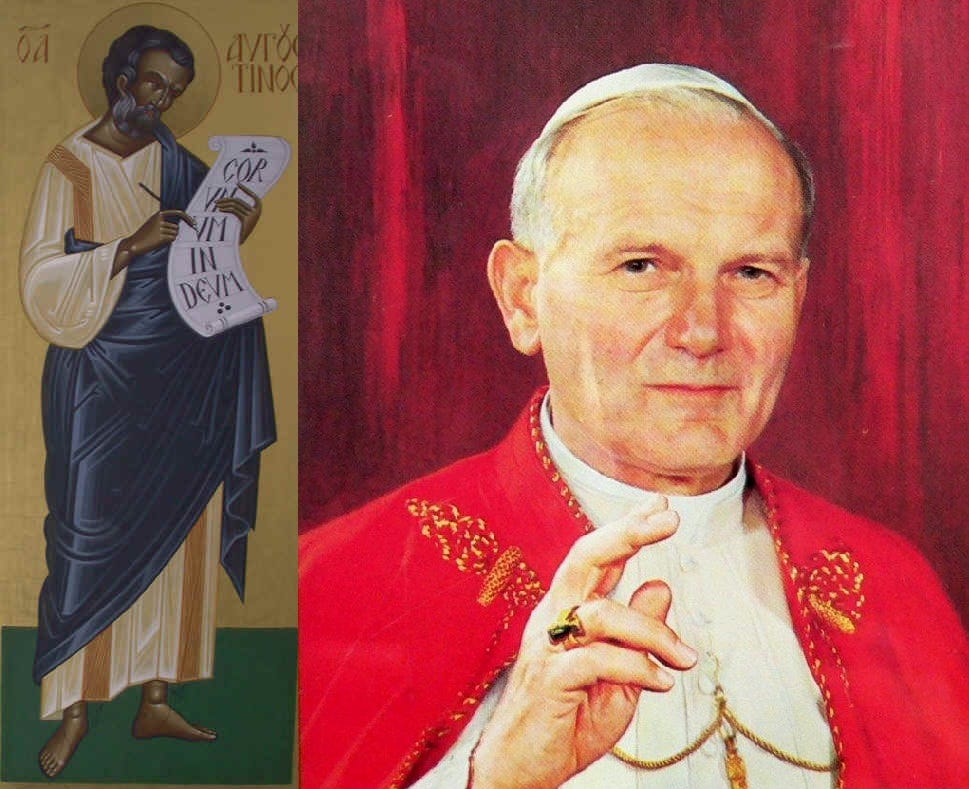
The disobedience of man introduced sin to the world of physical beings, but in a way, it was “the reflection and the consequence of the sin that had already occurred in the world of invisible beings.”[1] “After his fall,” says St. Augustine, the devil “sought to worm his way into the heart of man by cunning and false counsel.”[2] Although Pope St. John Paul II agrees with St. Augustine that there is a connection between the sin of the devil and the sin of man, they appear to disagree about the nature of that sin. John Paul II characterizes it as “contemptus Dei,” or man sharing in the devils’ complete hatred of God and everything connected to him.[3] While St. Augustine recognizes in the devil a kind of rejection of God, he very clearly connects his fall to pride: “but then came that proud and therefore envious angel who, through his pride, had turned away from God and had turned to himself.”[4] Although there is here an apparent divergence of opinion between these two great saints, a closer examination reveals an incredible harmony of thought on the nature of the original sin.
St. Augustine defines pride as “an appetite for perverse exaltation.”[5] By this, a creature “abandon[s] the principle to which the mind ought to adhere and instead, as it were, to become and to be one’s own principle.”[6] In pride, a creature abandons God as its source and guide, and instead turns to itself. Thus, “the first evil will…was a kind of defection from God’s work to the will’s own works.”[7] In contrast to humility, which voluntarily subjects the heart to God as its true superior, the proud will grasps at itself or at some other creature and so detaches itself from its true source of light and life.[8] Although pride seeks its own exaltation, paradoxically it is the subjection to God in humility that actually brings exaltation, since by it we are connected to he who can raise us up. Pride is a fault, says St. Augustine, and thus: “to be exalted is already to be cast down.”[9]
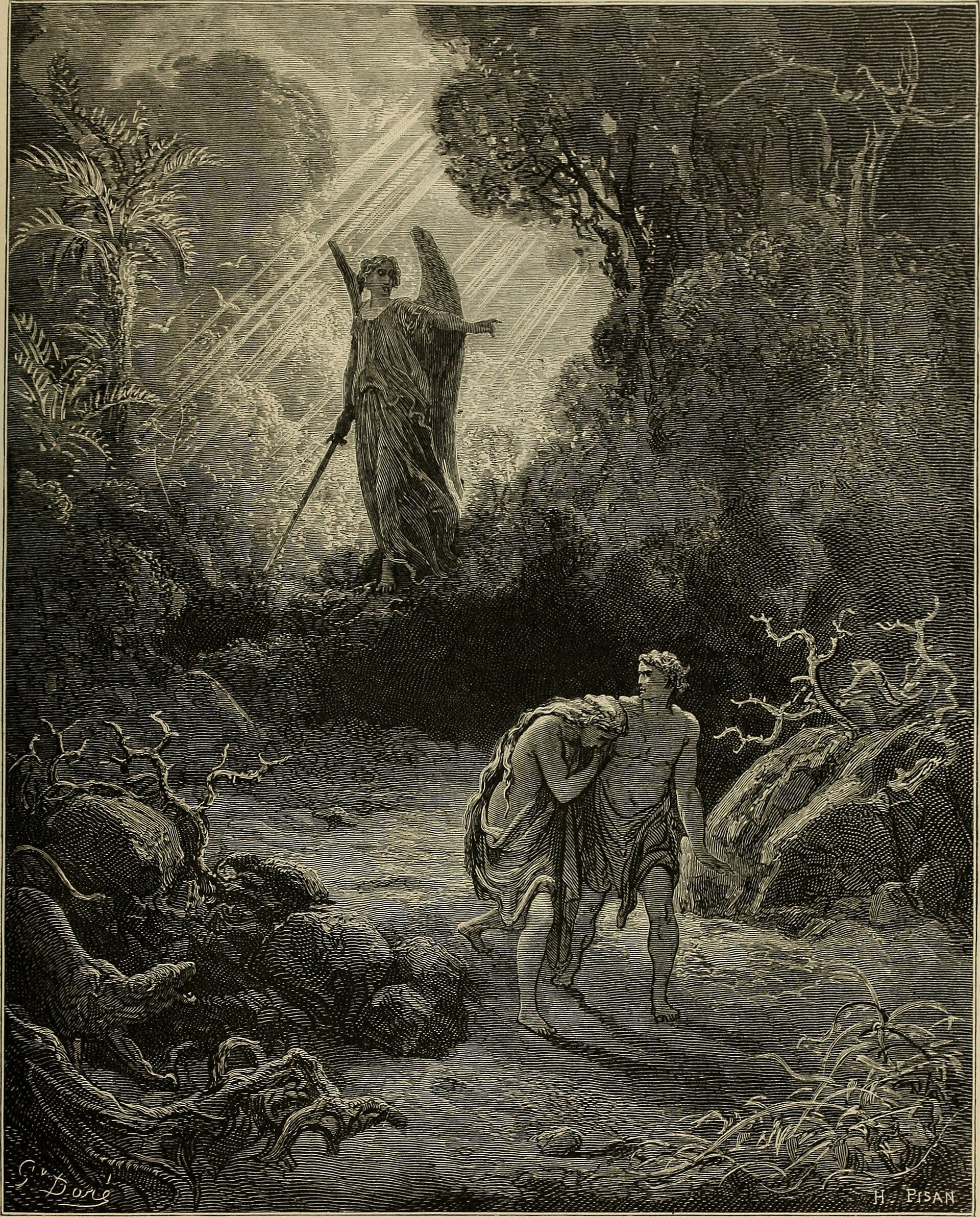
An echo of Augustine’s definition of pride can be discerned in John Paul’s treatment of the Tree of the Knowledge of Good and Evil. He describes it as a symbol of “the absolute limit which man as a creature must recognize and respect.”[10] Man is a creature, and God is not. From God flows the goodness in which creation participates. No attempt to reverse this order can succeed, since, in the end, that would be “contrary to creation’s own ontological constitution.”[11] The nature of the Tree warns man against transgressing a boundary that his own nature would not survive.
John Paul argues that by placing the Tree in the Garden, God reveals to man the ontological order of being and calls him to conform himself voluntarily to this order. Instead, however, man rejects God, grasps at the fruit of this Tree and in contempt, “set[s] himself in the place of God,”[12] and in so doing, creates his own downfall. This grasping is not only a clear form of pride according to Augustine’s definition (a desire for perverse exaltation), but also of its consequences, since “by grasping for more, then, a person becomes less when, in choosing to be self-sufficient, he defects from the only one who is truly sufficient for him.”[13]
If grasping at the place of God is what causes man’s fall, it is love of God in the proper subjection of humility that raises man up. For Augustine, the great difference between the godly and the ungodly is that: “in one the love of God comes before all else and in the other love of self.”[14] Had our first parents truly put the love of God first, then no temptation would have been able to sway them: “for if the will had remained steadfast in love for the higher and immutable good…it would not have been so darkened and chilled as to allow the woman to think that the serpent had spoken the truth.”[15] Had they heard the tempter with true humility, they would have not been swayed by his “You shall be like gods.”[16] Rather, they would have recognized that they “would have been better able to be like gods if they had clung to the true and supreme principle in obedience.”[17] But since they fell, they proved themselves lacking in love and humble subjection to God. Thus, according to Augustine, vulnerability to temptation proceeds from a defect in the heart that existed before the temptation had arisen, a defect for which they are culpable.
If grasping at the place of God is what causes man’s fall, it is love of God in the proper subjection of humility that raises man up.
In a similar way, John Paul recognizes culpability in our first parents for their vulnerability to the insinuations of the devil. Despite the myriad blessings of God whereby he established a wonderful relationship of friendship with man,[18] the devil casts doubt on the goodness of God. Seeking to pass on his own suspicion and accusation against God to man, the devil seeks to undermine man’s relation with God.[19] It is not for the fact of being tempted, but for the yielding to that temptation that man “commits a personal sin.”[20] That the devil accuses God is the result of the devil’s sin; that man listens to him and agrees constitutes man’s own sin. Man’s vulnerability to temptation is not the work of the devil, but a fault that brings “down upon themselves the anger of God.”[21]
Thus, although the teachings of these two saints on the nature of original sin are not identical, they can be seen to be in harmony. For Augustine’s definition of pride very neatly helps to clarify the nature of the Tree and what is truly at stake in God’s command not to eat of its fruit. And while John Paul points to the seeds of doubt that the devil plants in the woman to undermine her relationship with God, Augustine gives an explanation for why she is nevertheless culpable for being moved by that doubt.
And we today ought not to be disinterested observers of this discussion. For although the primordial sin was the personal sin of two people before the dawn of history, yet its effects are still to be felt today. Because of the pride of Adam and Eve wherein they doubted the goodness of God, we have inherited not their preternatural gifts of sanctifying grace and original justice, but rather their wounded nature[22] with its fundamental inclination to the self rather than to God, and with its inherent suspicion of God and his motives. To find healing for the effects of the pride of our parents, we must seek out humility. To find healing for the doubt of God’s goodness, we must allow him to show us his goodness once again. But, as the presence of the Tree in the Garden can show us, to seek out humility and God’s goodness is to discover that humility and God’s goodness have been seeking us out from the beginning.
Photo of John Paul II originally posted to Flickr by Beyond Forgetting at https://flickr.com/photos/23342600@N00/8226888.
[1] Cf. Pope St. John Paul II, Summary of Pope John Paul II’s Catechesis on Original Sin, September 8-October 8, 1986, text appeared in L’Osservatore Romano, II.7.
[2] St. Augustine, The City of God, Book XIV Section 11.
[3] Cf. JPII, II.8.
[4] Aug.XIV.11.
[5] Aug.XIV.13.
[6] Aug.XIV.13.
[7] Aug.XIV.11.
[8] Cf. Aug.XIV.13.
[9] Aug.XIV.13.
[10] JPII, I.5.
[11] JPII, II.5.
[12] JPII, II.5.
[13] Aug.XIV.13.
[14] Aug.XIV.13.
[15] Aug.XIV.13.
[16] Gen.3:5, quoted in Aug.XIV.13.
[17] Aug.XIV.13.
[18] Cf. JPII I.3-5.
[19] Cf. JPII II.6-7.
[20] JPII II.6.
[21] JPII IV.5.
[22] Cf. JPII V.2.