
Isn't a Scrupulous Conscience Better than a Lax One?
The lesser of two evils?

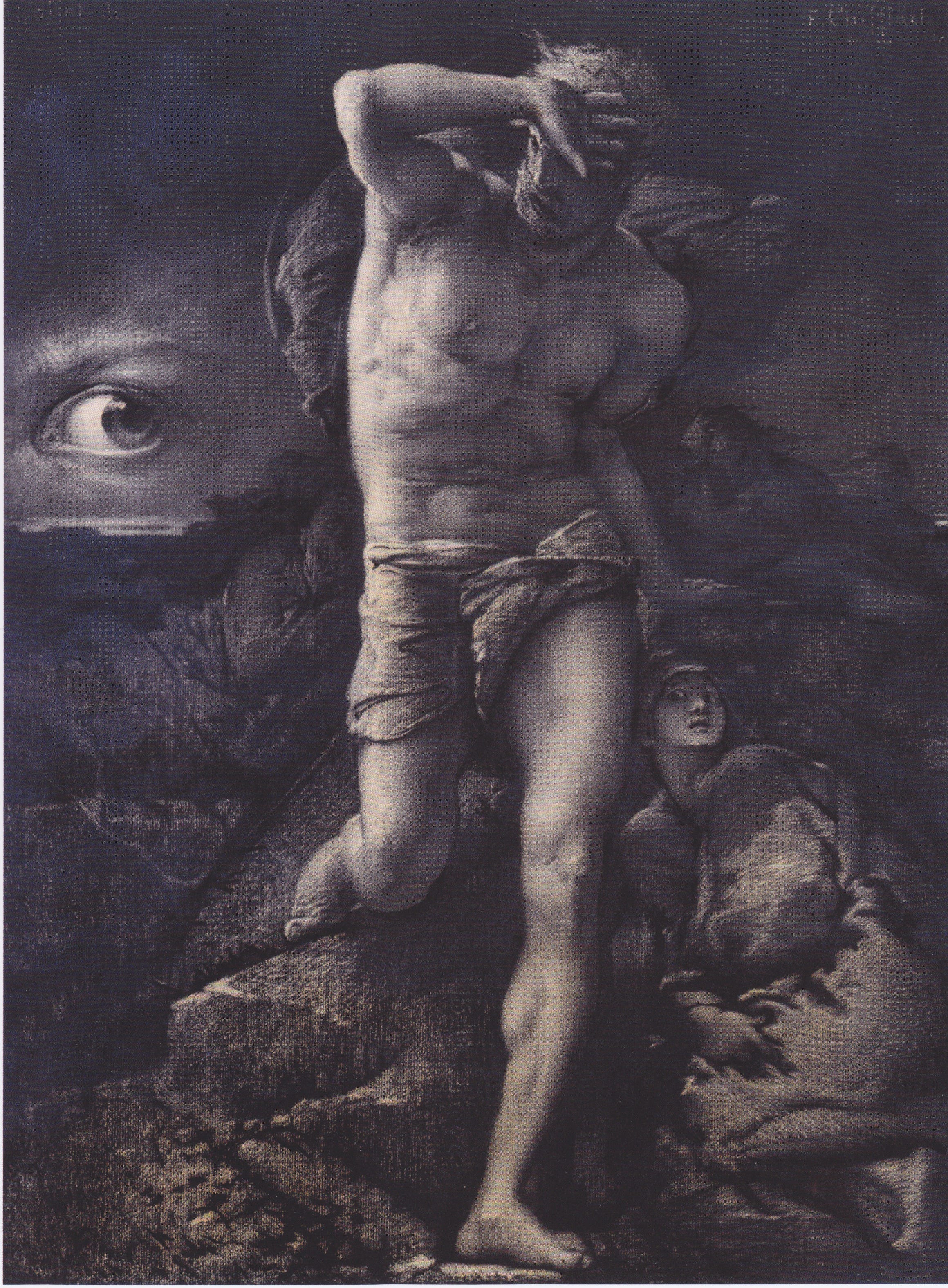
This is one of my favorite questions a student has ever asked me. Not only did it cause me to think about the Deposit of Faith in a new way, it is also, I think, important to help us reflect on our relationship with God.
The Catechism of the Catholic Church describes conscience as “a judgment of reason whereby the human person recognizes the moral quality of a concrete act” (CCC 1778).
Given that we should work towards a delicate conscience - one that tends to judge the goodness or evil of each act correctly - but that this work is sometimes long and laborious, our consciences often fall into one or other kinds of erroneous consciences: lax or scrupulous.
A lax conscience tends to underestimate the evil of an action and to judge the goodness too loosely. Thus, a lax conscience might hold an evil act to be good, or a mortally sinful act to be merely venial.
A scrupulous conscience tends to overestimate the evil of an action and to judge the goodness too harshly. Thus, a scrupulous conscience might hold a good act to be evil, or a merely venially sinful act to be mortal.
The question is: until we have arrived at a delicate conscience, which is a better kind of error to fall into? As long as my conscience is going to err, is it safer to shoot for laxity or scrupulosity?
For the students that have asked me this question, they have almost always preferred to err on the side of scrupulosity. After all, since the fundamental rule of morality requires us to “avoid evil” (cf. CCC 1776), a conscience that overestimates evil would never direct us to do an act that was actually evil. Although an error, scrupulosity is appealing as the “play it safe” option.
But it can be almost as appealing to err on the side of laxity. After all, the fundamental rule of morality also requires us to “do good” (cf. CCC 1776). Therefore, a conscience that overestimates the good would never direct us to neglect an act that was genuinely good. Although an error, laxity is appealing as the “generous” and “less restrictive” option.
It is at this point in the conversation that students are most likely to be able to discern into which category of conscience they tend to fall. The logic appealing to err on the side of scrupulosity is inversely proportional to the logic appealing to the opposite error of laxity. The student who finds one side of the argument more appealing than the other can be reasonably assured that he has discovered the kind of conscience he has.
The resolution to the question is that, of course, neither of these errors is a resolution. To err on either side of the truth is still to commit an error. We must always aim at a delicate conscience rather than at any form of erroneous conscience.
To err on either side of the truth is still to commit an error.
However, even though we are to aim at neither a scrupulous conscience nor a lax one, there is sometimes a practical wisdom to tolerating for a time the excesses of one error over another.
In his Introduction to the Devout Life, St. Francis de Sales suggests that scrupulosity can be a good thing at a certain stage of conversion:
The low, servile fear that begets scruples in the souls of new converts from a sinful life is a commendable virtue in this first period and a sign of future purity of conscience.1
But he also says that it is inappropriate at another stage:
The same fear would be blameworthy in those far advanced, men in whose hearts love ought to reign, and little by little love drives out such servile fear.2
Thus, a new convert, ostensibly struggling with a lax conscience, could benefit from the exaggerated discipline that a scrupulous conscience imposes; but a devout person, whose habits have been largely purified by that discipline should “regress to the mean,” even if that might be perceived to be “laxity.”
C. S. Lewis illustrates a similar point in his Screwtape Letters, through his characteristic inversion of good advice in the mouth of the eponymous tempter:
We direct the fashionable outcry of each generation against those vices of which it is in least danger and fix its approval on the virtue nearest to that vice which we are trying to make endemic.3
Applied to this question, Screwtape’s logic appears to invite a scrupulous person loudly to decry any form of relaxing his judgments or a lax person stubbornly to resist any form of ‘guilt’ at true sins.
The game is to have them all running about with fire extinguishers whenever there is a flood, and all crowding to that side of the boat which is already nearly gunwale under.4
Instead of a scrupulous person applying the remedy that scrupulosity would demand, a proper practical application of what might appear to be laxity might actually be helpful. Similarly, instead of a lax person doubling and tripling down on the remedy that laxity would suggest, a moderate application of what might appear to be scrupulosity could actually help advance them in the spiritual life.
And St. Francis de Sales, drawing on St. Augustine, suggests that even the extremes of the opposite error can for a time benefit the one who is journeying to perfection.
Thus, a practical answer to the question of into which form of error in conscience it is better to fall depends on the moral situation of the person who is asking the question.
Do you fear God’s judgment too much? Contemplate his mercy. Perhaps make praying the Chaplet of Divine Mercy a higher priority in your devotional life.
Do you neglect what God considers necessary? Contemplate his law and his judgment. Perhaps put a bit more ‘elbow grease’ into a consistent and thorough examination of conscience directed at a good sacramental Confession.
At the height of perfection, a delicate conscience has an appropriate fear of God’s punishment AND an appropriate filial trust in his mercy in proper proportion to our complete and total dependence on him.
St. Francis de Sales, Introduction to the Devout Life, translated by John K. Ryan, Image Books, New York: 2003, p. 114.
Ibid.
C. S. Lewis, The Screwtape Letters, Letter 25, The Centenary Press, London: 1945, p. 128-9.
Ibid.
Yes!!!! Beautifully put!!!