
Cosmic Temple
Notes on a Very Great Mystery

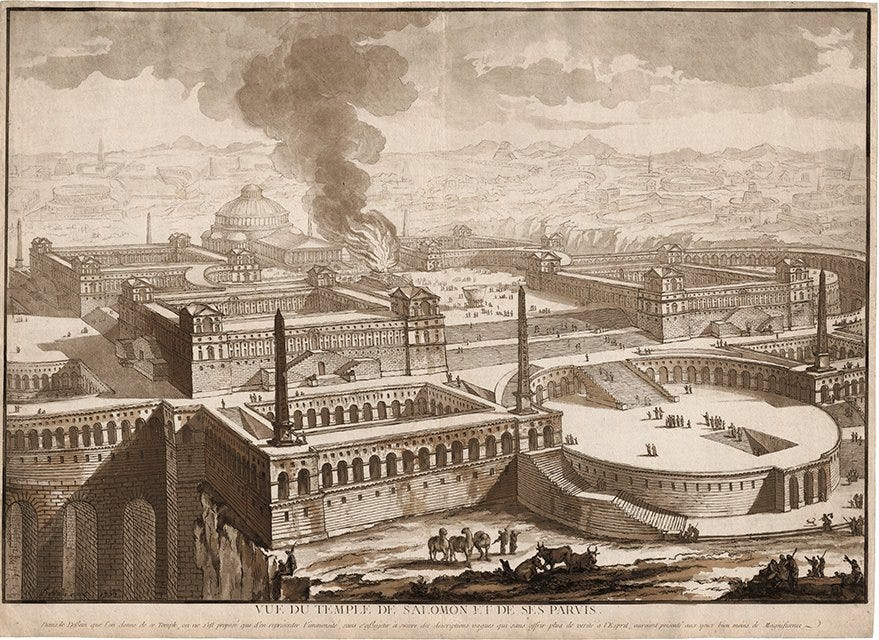
The meeting-place between God and man is a place of mystery;
that is, of divine infinite reality ‘folded into’ the material realm.
The Temple built at Jerusalem was of incredible importance. Not only was it the dwelling place of God on earth, a central visible sign of God’s union with his people, and the center of Israel’s worship, but it was also understood to be a representation, before YHWH, of the entire cosmos that he created.
Evidence central to this idea comes from the Tabernacle construction narrative in Exodus. God instructs Moses to construct the Tabernacle “according to all that I show you concerning the pattern of the tabernacle and all of its furniture” (Ex 25:9). This pattern serves also as the basis of the construction of the Temple (cf. Wis 9:8). The ‘pattern’ that Moses receives is taken to refer to the idyllic order of man’s union with God in Eden, the entire cosmos itself, and the heavenly sanctuary which is the true dwelling of God.
The comparison between the Temple and Eden is made very clear through a close examination of the parallel structure of the Creation Narrative (Gen 1:1-2:3) and the Tabernacle Construction narrative (Ex 35-40). One clue is that the Hebrew term for the ‘lights’ in the heavens that God creates is the same word used to refer to the lights of the lampstand built for the Holy Place of the Tabernacle. Additionally, the 7-fold structure of the days of creation, along with the stages of the construction of the Tabernacle appear to be very tight parallels both in overall structure and in similar phrasings.1
Identifying the Temple with creation, however, also opens the door to recognizing its cosmic symbolism. From their common vocabulary, the seven lights of the lampstand correspond, to the seven heavenly lights: the sun, the moon, and the five planets visible to the ancient Jews. Psalms corroborates this connection, describing God’s reaction to the sins of his people in the construction of the Temple: “He built his sanctuary like the high heavens, like the earth, which he has founded for ever” (Ps 78:69). Particular cosmic symbolism extends even to the attire of the priest, “for upon his long robe the world was depicted” (Wis 18:24), and his appearance in Sirach was “like the morning star among the clouds” (50:6).
Extrabiblical evidence from Josephus and Philo expands upon this theme. Josephus connects the tripartite structure of the temple (court – inner sanctuary – Holy of Holies) to the three-part structure of the cosmos (earth – heavens – God’s dwelling above the cosmos); while Philo examines the minute symbolism of practically every element – even down to the ingredients of the daily incense!2
Identifying the Temple with the cosmos points to a further layer of symbolism: it corresponds to the mysterious dwelling place of God. In his dedicatory prayer, Solomon prays that God will receive prayers and sacrifices directed to this earthly structure as if they were presented before him “in heaven your dwelling place” (1 Kg 8:43), for God cannot be contained even in the cosmos: “Behold, heaven and the highest heaven cannot contain you; how much less this house which I have built!” (v. 27). The letter to the Hebrews confirms this correspondence by speaking of “the greater and more perfect tent (not made with hands, that is, not of this creation)” (9:11).
The multi-layered cosmic symbolism of the instructions God gave Moses appears to indicate that the meeting-place between God and man is a place of mystery – that is, of divine infinite reality ‘folded into’ the material realm. God, stooping down to earth to dwell with man, makes the Temple a place of contact with the eternal reality of the omnipresent God that nevertheless occupies a definite place in a definite time. Man’s engagement, therefore with this reality is for each person a movement from a specific place and time in the context of God’s unfolding revelation to union with the unchanging God Himself.
The coming of Christ, the true Temple (cf. Jn 2:21), draws all these lines of inquiry into himself. He is the Edenic garden of right harmony with God – the place where Noah’s dove finally finds a resting place (cf. Gen 8:12; Mt 3:16) – the Logos ‘pattern’ of the cosmos itself (cf. Jn 1:3), and the eschatological dwelling-place of God with his people (cf. Rev 21:22). In his Divine Person he is the definitive nexus of God’s union with humanity (cf. the Definition of Chalcedon, CCC 467), he manifests the glory of God’s love for his people (cf., e.g., Kn 17:4), and he is the center of all true worship of the Father (cf. 1 Tim 2:5; Heb 9). He is the summary, recapitulation, and representation of the whole of creation (“all things were made through him” Jn 1:3).
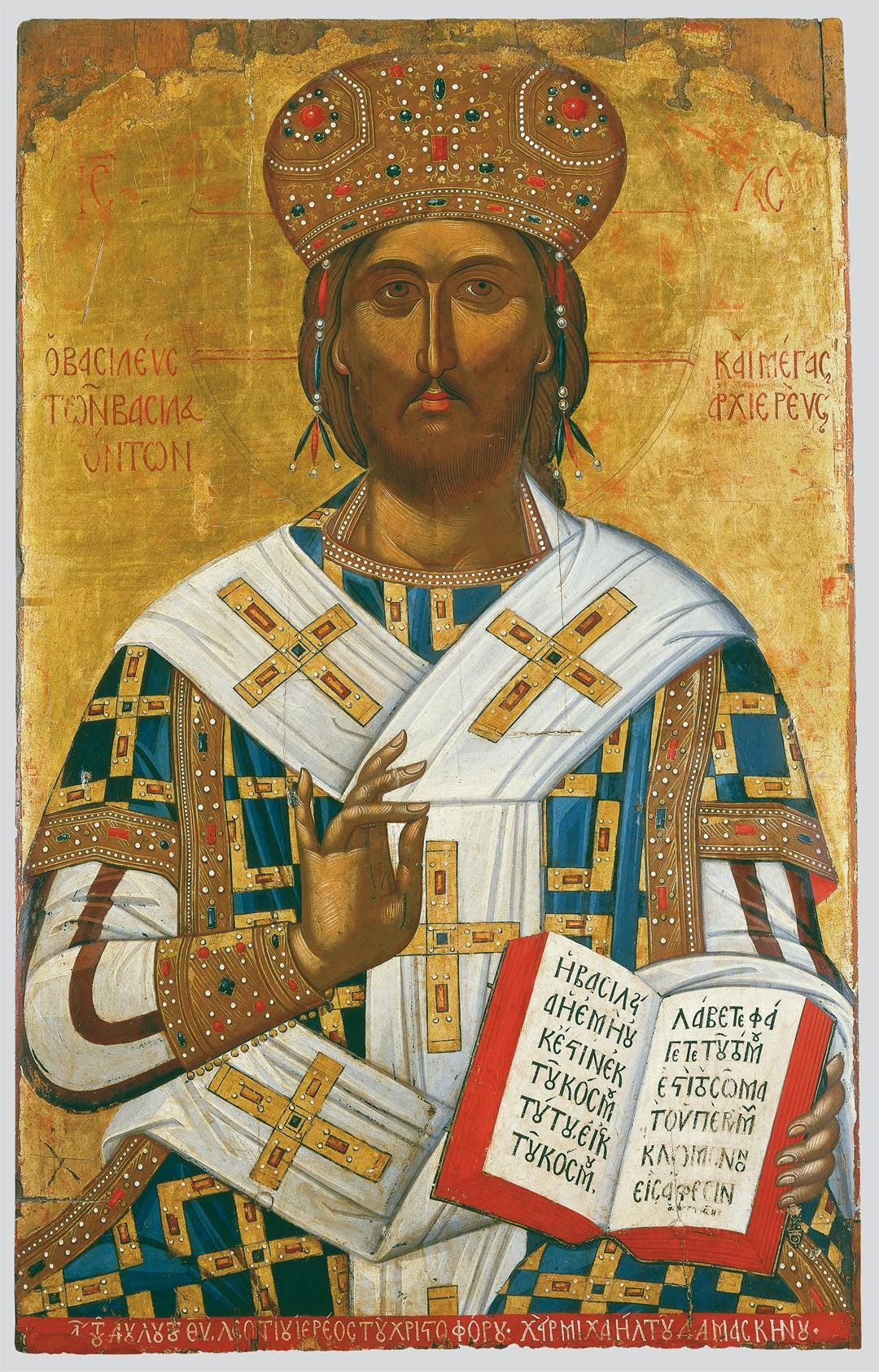
Therefore, every act of worship from any member of Christ’s Mystical Body must be directed first and foremost to Jesus himself, through whom it is presented to the Heavenly Father in the Heavenly Sanctuary.
For a thorough study of the parallels in these texts, see Gary A. Anderson, That I May Dwell Among Them: Incarnation and Atonement in the Tabernacle Narrative, Grand Rapids, MI: Eerdmans, 2023.
C. T. R. Hayward’s translation and commentary on these and other extrabiblical texts is informative: The Jewish Temple: A Non-Biblical Sourcebook. New York: Routledge, 1996.